Non-Owner Insurance and Rental Cars: How Coverage Works
Get SR-22 Quotes NowWhy Non-Owner Policies Usually Don't Cover Rentals
Most non-owner SR-22 policies exclude rental vehicles from coverage by design. Non-owner policies are structured to provide secondary liability coverage when you drive someone else's car — not commercial rental transactions. The policy language typically states coverage applies to vehicles "not owned by or furnished for regular use to the insured," and many carriers classify rental agreements as "regular use" arrangements that void the non-owner policy's protection.
This creates a specific problem if you're maintaining non-owner SR-22 coverage to reinstate a suspended license after a DUI or multiple violations. You need continuous SR-22 filing to satisfy your state's requirements — usually 3 years in most states — but that filing alone doesn't cover you in a rental car. If you cause an accident in a rental while relying on your non-owner policy, you may be personally liable for damages that exceed the rental company's minimum coverage, which in many states is only $15,000 per person.
The gap appears because non-owner policies are priced and underwritten as occasional-use coverage. Rental transactions, even short-term ones, represent a different risk profile that requires either the rental company's insurance or a rider specifically endorsing rental coverage. Roughly 70% of non-owner policies issued by non-standard carriers exclude rental vehicles outright, according to policy reviews across major high-risk insurers. The remaining 30% may cover rentals but only if you purchase the rental company's liability coverage as primary, making your non-owner policy excess — meaning it only pays after the rental company's limits are exhausted.

What the Rental Counter Offers (and What It Doesn't)
Rental companies offer three primary coverage options at the counter: the Loss Damage Waiver (LDW), Supplemental Liability Protection (SLP), and Personal Accident Insurance (PAI). The LDW covers damage to the rental car itself — it's not liability insurance. If you decline it and total the rental in an at-fault accident, you're responsible for the replacement cost, which can run $25,000 to $40,000 for a midsize sedan.
Supplemental Liability Protection is what most SR-22 drivers actually need. It raises the rental company's baseline liability coverage — typically $15,000 per person in minimum-limit states — to $1 million or more. This protects you if you injure someone or damage their property while driving the rental. The cost averages $10 to $15 per day. Without it, you're covered only to the state minimum, and any damages beyond that come out of your pocket.
Here's the critical issue: rental counter coverage does not satisfy your SR-22 filing requirement. Your SR-22 is a certificate filed by your insurance carrier confirming you maintain continuous liability coverage. If you drop your non-owner policy and rely only on rental insurance, your SR-22 filing lapses. Most states treat a lapse as a violation that extends your SR-22 requirement period by 1 to 3 years and triggers an immediate license suspension. You must maintain both: the non-owner SR-22 policy to satisfy the state, and the rental company's SLP to actually cover you while driving.
How to Cover Yourself When Renting
The safest approach is to maintain your non-owner SR-22 policy continuously and purchase the rental company's Supplemental Liability Protection at the counter. This gives you two layers: the SR-22 filing satisfies your legal requirement, and the SLP provides the actual liability coverage while you're driving the rental. The combined cost typically runs $80 to $120 per month for the non-owner policy plus $10 to $15 per rental day for the SLP.
Some non-standard carriers offer rental endorsements on non-owner policies, but they're rare and often increase your monthly premium by 15% to 25%. If your carrier offers it, confirm in writing that the endorsement covers both liability and physical damage on rentals, and verify whether it applies as primary or excess coverage. Primary coverage means your policy pays first; excess means it only pays after the rental company's limits are exhausted. Most endorsements are excess, which still leaves you responsible for damages up to the rental company's limit.
If you rent frequently — more than 10 days per year — compare the annual cost of purchasing SLP at the counter against adding a rental endorsement to your non-owner policy. For example, 15 rental days at $12 per day for SLP costs $180 annually. A rental endorsement that raises your non-owner premium from $95 to $115 per month costs $240 annually. The rental counter option is cheaper unless your carrier offers a low-cost endorsement, which is uncommon among high-risk insurers.
Never drop your non-owner SR-22 policy while renting, even if the rental company's coverage feels adequate. A lapse triggers immediate DMV notification in most states, and reinstatement after a lapse typically requires paying a $50 to $250 reinstatement fee, refiling the SR-22, and in some cases restarting your entire SR-22 period from day one.
Get Your SR-22 Even Without a Car
Get SR-22 Quotes NowState-Specific SR-22 Rules and Rental Coverage
SR-22 filing requirements vary by state, but the interaction with rental coverage follows similar patterns. In California, drivers with SR-22 requirements must maintain continuous coverage for 3 years. The state DMV receives electronic notification within 24 hours if your policy lapses, and your license is suspended immediately. If you're renting a car in California and your non-owner policy excludes rentals, you're legally compliant for SR-22 purposes but not actually covered for liability beyond the rental company's baseline — which in California is often just $15,000 per person.
Florida is a no-fault state that requires Personal Injury Protection (PIP) on all policies, but non-owner policies are exempt from the PIP requirement. If you have a non-owner SR-22 policy in Florida and rent a car, the rental company's coverage must include PIP, which it typically does. However, Florida's minimum liability limits are only $10,000 per person, making SLP essential if you rent there. Florida SR-22 filings are usually required for 3 years after a DUI or serious violation.
Texas requires SR-22 filings for varying durations depending on the violation — DUI-related suspensions typically require 2 years, while uninsured motorist violations may require 3 years or longer. Texas law does not mandate a minimum SR-22 filing period statewide; the duration is set by the court order or DMV reinstatement letter, which means many drivers continue filing longer than legally required simply because they were never told their requirement period ended. When renting in Texas, verify your non-owner policy's rental exclusion language, as Texas carriers often apply broader exclusions than other states.
In Ohio, SR-22 requirements typically last 3 years, and the state BMV requires financial responsibility coverage of at least $25,000 per person and $50,000 per accident. Non-owner policies meet these minimums, but rental companies in Ohio often provide only $25,000 per person baseline, leaving you exposed to the difference if you cause a serious accident. Always purchase SLP when renting in Ohio if your non-owner policy excludes rentals.
What Happens If You're in an Accident in a Rental
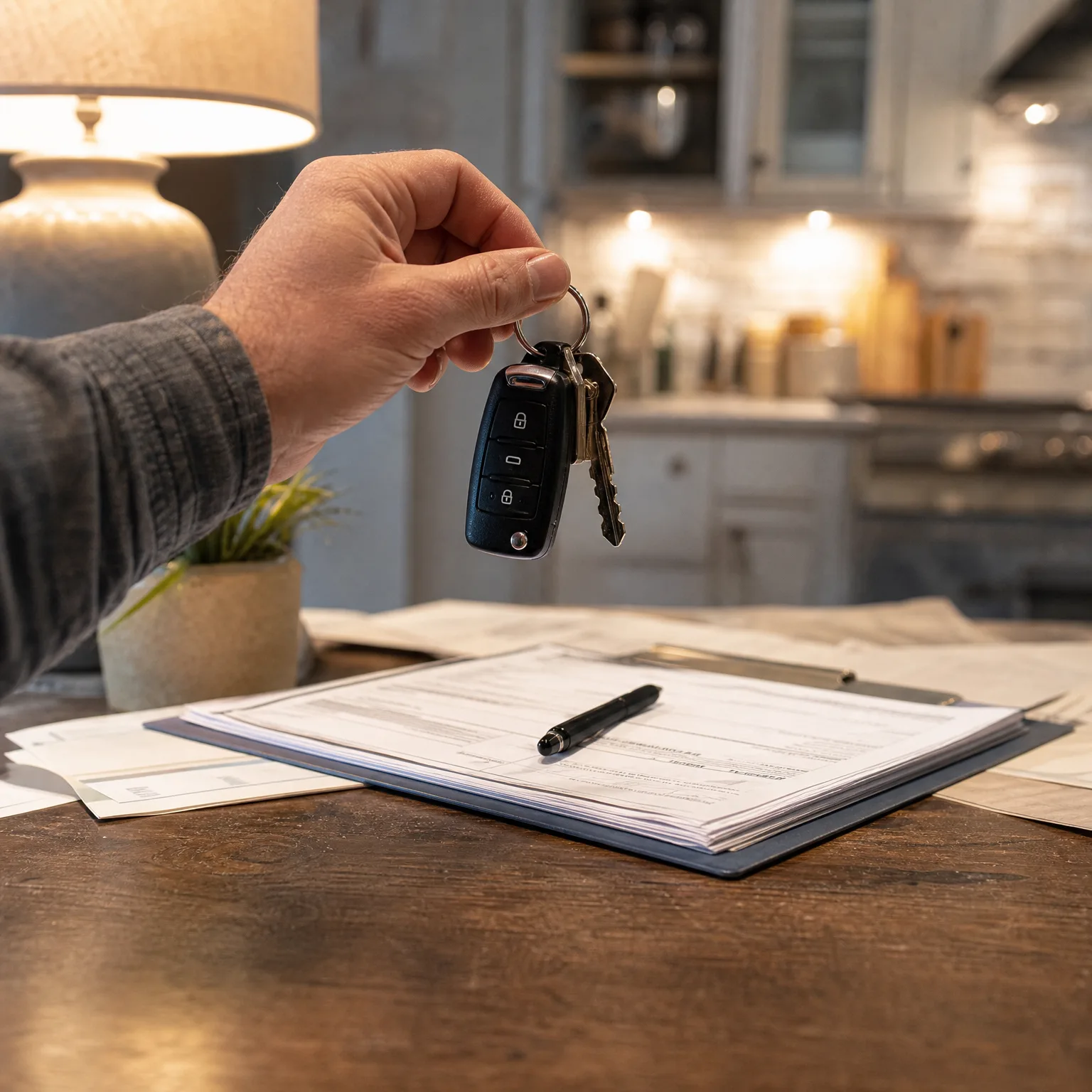
If you cause an accident while driving a rental car and your non-owner SR-22 policy excludes rentals, you're personally liable for all damages that exceed the rental company's baseline coverage. In a state with $15,000 per person minimums, that means you're exposed to any amount above $15,000 per injured party. Medical bills from a moderate injury often exceed $50,000, and if you injured multiple people, you could face six-figure liability.
The rental company will bill you immediately for any damage to the rental vehicle unless you purchased the Loss Damage Waiver. Repair costs for modern vehicles are high — a crumpled front end on a 2023 sedan can run $8,000 to $15,000 due to sensor and camera systems embedded in bumpers and grilles. If the car is totaled, you owe the replacement cost, which the rental company calculates at retail rather than depreciated value.
Your SR-22 filing status is also at risk. If the accident results in a lapse notification — for example, if your non-owner carrier cancels your policy mid-term due to the claim — your state DMV receives notice and suspends your license. Even if the accident itself doesn't trigger a new violation, the lapse extends your SR-22 requirement period and adds reinstatement fees. Most states impose an additional 6 to 12 months of SR-22 filing time for each lapse event, and some restart the entire requirement period from the lapse date.
If you purchased the rental company's Supplemental Liability Protection, it covers injury and property damage claims up to the policy limit — typically $1 million. This protects you from personal liability and keeps the accident from affecting your non-owner SR-22 policy, since the rental company's coverage responds first. The rental company may still pursue you for loss-of-use charges and administrative fees if you didn't purchase the LDW, but those costs are typically under $1,500 and don't trigger license or SR-22 consequences.

Finding Non-Owner SR-22 Coverage That Works for Rentals
If you rent cars regularly and need non-owner SR-22 coverage, ask carriers during the quote process whether their policy includes rental coverage or offers a rental endorsement. Most non-standard carriers — those who specialize in high-risk drivers with DUIs, violations, or SR-22 requirements — do not include rentals in their base non-owner policies, but a few offer endorsements for an additional premium.
Carriers that frequently write non-owner SR-22 policies include The General, Direct Auto, Acceptance, Bristol West, and state-specific high-risk pools. Of these, The General and Direct Auto occasionally offer rental endorsements in select states, but availability varies. When comparing quotes, confirm whether the base policy excludes rentals and whether an endorsement is available. If it's available, get the monthly cost difference in writing before binding coverage.
If no rental endorsement is available or the cost is prohibitive, your best option is to maintain the non-owner SR-22 policy for compliance and purchase the rental company's SLP every time you rent. This approach is straightforward, avoids coverage gaps, and ensures your SR-22 filing remains active. Track your rental frequency over 12 months; if you're renting more than 15 days per year, revisit the endorsement option annually, as carrier offerings and pricing change.
Never assume your non-owner policy covers rentals unless you have written confirmation from your carrier. Policy exclusions are enforceable, and discovering a gap after an accident leaves you personally liable with no recourse. Request a copy of your policy declarations page and exclusions section, and review it for language referencing "rental vehicles," "vehicles furnished for regular use," or "commercial rental agreements." If any of those phrases appear in the exclusions section, your policy does not cover rentals.
Frequently Asked Questions
Does my non-owner SR-22 policy automatically cover rental cars?
Most non-owner SR-22 policies exclude rental vehicles from coverage. Roughly 70% of policies issued by non-standard carriers exclude rentals outright, and the remaining 30% usually provide only excess coverage after the rental company's limits are exhausted. Always confirm rental coverage in writing with your carrier before renting.
Can I drop my non-owner SR-22 policy if I'm only renting cars?
No. Dropping your non-owner SR-22 policy triggers an immediate lapse notification to your state DMV, which suspends your license and typically extends your SR-22 requirement period by 6 to 12 months or more. You must maintain continuous SR-22 coverage even if you're only driving rental cars.
What happens if I have an accident in a rental without Supplemental Liability Protection?
You're personally liable for all damages that exceed the rental company's baseline coverage, which is often just $15,000 per person in minimum-limit states. Medical bills from a moderate injury frequently exceed $50,000, and if your non-owner policy excludes rentals, you have no coverage for the difference.
Does the rental company's insurance satisfy my SR-22 filing requirement?
No. SR-22 is a certificate filed by your insurance carrier confirming you maintain continuous coverage. Rental company insurance is not connected to your SR-22 filing, so relying only on rental coverage creates a lapse that suspends your license and extends your SR-22 period.
Which non-standard carriers offer rental coverage on non-owner SR-22 policies?
The General and Direct Auto occasionally offer rental endorsements in select states, but availability and pricing vary. Most non-standard carriers do not include rentals in base non-owner policies. Always request written confirmation of rental coverage before binding a policy.
Related Articles

SR-22 for Snowbirds: Filing Between Two States
5/18/2026
SR-22 for Motorcycle-Only Owners: Non-Owner Filing Guide
5/18/2026
Route Restricted License + SR-22 in South Carolina
5/18/2026
SR-22 and Florida FAJUA: What Replaced the State Pool
5/18/2026
Out-of-State DUI: Which State Files Your SR-22?
5/18/2026
SR-22 vs FR-44 in Virginia: Bodily Injury Minimum Gap
5/18/2026