Non-Owner Insurance for College Students Who Borrow Cars
Get SR-22 Quotes NowWhen a College Student Actually Needs an SR-22 on a Non-Owner Policy
An SR-22 filing is a state-mandated certificate proving you carry minimum liability coverage. It's ordered by a court or DMV following specific violations — typically DUI, reckless driving, driving without insurance, or license suspension. If you're a college student and the state has not explicitly required you to file an SR-22, you don't need one, even if you borrow cars regularly.
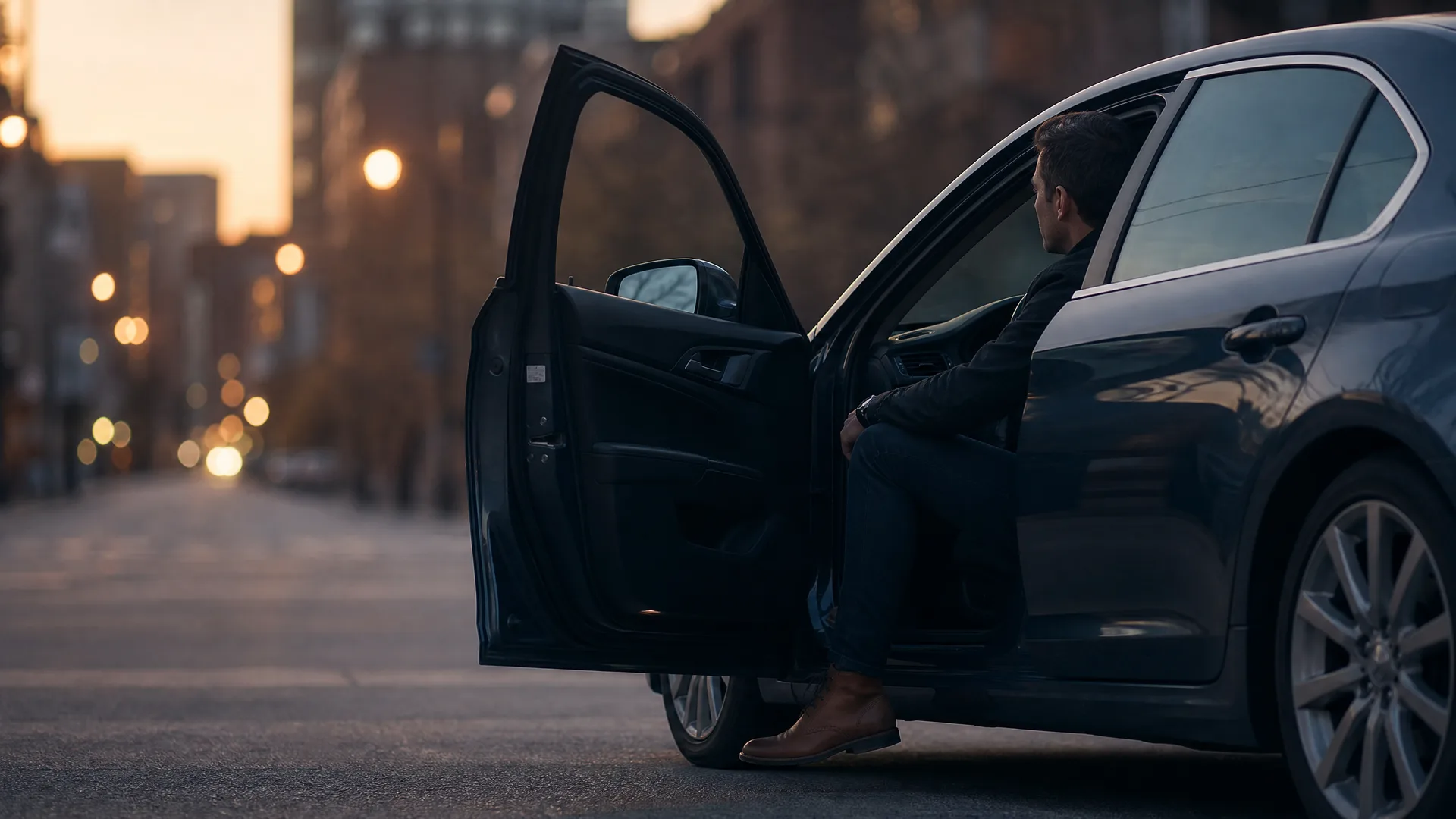
The confusion stems from non-owner insurance itself. A non-owner policy provides liability coverage when you drive a car you don't own and don't have regular access to. If your roommate lets you borrow their Honda twice a month, you likely need a non-owner policy. But that policy only requires an SR-22 attachment if a court or DMV has ordered the filing as part of your violation penalty or license reinstatement.
Most states require SR-22 filing for 3 years following a DUI or major violation. Some states like California and Florida may extend this to 5 years depending on the severity. The filing itself costs $15 to $50 as a one-time or annual fee paid to your insurer, who then electronically submits the certificate to your state DMV. The real cost is the premium increase: college students with DUIs typically see non-owner policy premiums between $400 and $900 annually, compared to $200 to $400 for students with clean records.

What Counts as Regular Access and Why It Disqualifies Non-Owner Coverage
Non-owner insurance only works if you do not have regular access to a specific vehicle. Regular access means the car is available for your use most or all of the time — not that you own it. If your parents put you on the title of their second car while you're at school, if your roommate lists you as a driver on their policy, or if your partner's car is parked at your apartment and you have keys, you have regular access. In these cases, you cannot use a non-owner policy. You must be listed as a driver on the vehicle's existing policy or purchase a standard auto policy.
The stakes are higher with an SR-22 requirement. If you file an SR-22 on a non-owner policy but actually have regular access to a vehicle, and that vehicle's insurer discovers the arrangement after a claim, they can deny coverage. The state may also consider your SR-22 filing invalid, which restarts your filing period and can trigger a new license suspension.
Borrowing a car occasionally — once or twice a month from a friend, a weekend rental, or using a car-sharing service — does not constitute regular access. If you're home from college for winter break and drive your parents' car for two weeks, their policy typically extends permissive use coverage to you. But if you're driving that car every day all summer, you need to be added as a listed driver on their policy, and if you have an SR-22 requirement, the filing must attach to that policy, not a separate non-owner form.
How Non-Owner SR-22 Policies Work for Students Without Cars
A non-owner SR-22 policy provides two functions: it satisfies your state's liability insurance requirement, and it allows your insurer to file the SR-22 certificate with the DMV. The policy does not cover a specific vehicle. Instead, it follows you as a driver. If you borrow a car and cause an accident, your non-owner policy provides secondary liability coverage — it pays only after the vehicle owner's policy limits are exhausted.
Most states require minimum liability limits of 25/50/25 (in thousands: $25,000 per person for bodily injury, $50,000 per accident, $25,000 for property damage). If you're required to file an SR-22, you must carry at least these minimums. Some judges or DMV hearing officers impose higher limits as a condition of reinstatement — 50/100/50 or 100/300/100 are common. Verify your exact requirement in your court order or DMV notice before purchasing a policy, because if your limits fall below the mandate, your SR-22 filing will be rejected and your license will remain suspended.
Not all insurers write non-owner policies, and fewer write them for drivers with SR-22 requirements. National carriers like GEICO, Progressive, and The General offer non-owner SR-22 coverage in most states. State Farm and Allstate typically do not. Regional non-standard carriers like Direct Auto and Acceptance Insurance specialize in high-risk non-owner policies. Expect quotes to vary widely: a student with a single DUI in Ohio might pay $55 per month with one carrier and $110 with another for identical coverage.

Get Your SR-22 Even Without a Car
Get SR-22 Quotes NowCommon Mistakes College Students Make With Non-Owner SR-22 Filings
The most frequent error is letting the policy lapse. If your non-owner SR-22 policy cancels for non-payment or you voluntarily drop it before your filing period ends, your insurer must notify the state DMV within 24 to 72 hours. Most states immediately suspend your license again, and reinstatement requires paying a new suspension fee (typically $100 to $300), filing a new SR-22, and in some cases restarting the entire SR-22 filing period from zero.
Another mistake is assuming your parents' policy covers you while you're at school. If you live more than 100 miles from home and don't bring a family car to campus, most insurers exclude you from the household policy unless you're listed as an away-at-school driver. If you have an SR-22 requirement and your parents' insurer has excluded you, your SR-22 filing will show a gap, triggering a suspension. You need your own non-owner policy with the SR-22 attached.
Some students also misunderstand state residency rules. If you attend college in a different state than your license state, your SR-22 must be filed in the state that issued the license and the violation — not the state where you currently live. A Michigan student with an SR-22 requirement attending college in Illinois must file the SR-22 in Michigan and maintain a Michigan-compliant policy, even if they purchase the policy from an insurer licensed in Illinois. Verify your insurer can file electronically in your license state before binding coverage.

What Happens to Your Non-Owner SR-22 Policy After Graduation
When you graduate and purchase a car, you cannot keep the non-owner policy. You must cancel it and transfer the SR-22 to a standard auto policy that lists the vehicle. Your insurer can typically transfer the SR-22 filing to the new policy without interruption if you do this within the same company. If you switch carriers, the new insurer must file a new SR-22 before the old one cancels, or you'll create a gap.
If your SR-22 filing period has not yet ended, expect your rates to remain elevated. A 22-year-old male with a DUI filing an SR-22 on a standard auto policy for a 2015 Honda Civic might pay $2,400 to $4,200 annually in high-cost states like Michigan or Louisiana, compared to $1,200 to $1,800 for a driver with a clean record. Rates typically drop 15% to 30% once the SR-22 filing period ends and the violation ages beyond the lookback window — usually 3 to 5 years depending on the state and violation type.
If you graduate, move home, and will not own a car but still have time remaining on your SR-22 filing period, you must maintain the non-owner policy until the filing period expires. Some students assume moving back into their parents' household and being added to the family policy satisfies the SR-22 requirement, but unless the SR-22 is attached to that policy, the state will consider the filing lapsed. Confirm with your insurer that the SR-22 is transferred or maintained on the correct policy, and request written confirmation that the filing remains active with the DMV.

How to Compare Non-Owner SR-22 Quotes as a College Student
Start by gathering your violation details, court order or DMV notice, and exact SR-22 filing duration. Contact at least three insurers that write non-owner policies in your state and confirm they can file the SR-22 electronically with your DMV. Request quotes at your state's minimum liability limits and at one higher tier — this shows you the cost difference and ensures you meet any court-imposed coverage requirements.
Payment options matter for college students. Some high-risk insurers require full six-month premiums upfront, which can be $300 to $600. Others offer monthly payment plans with a $5 to $15 installment fee per month. If you're on a tight budget, a carrier that charges $60 per month with a $10 fee may be more manageable than one that requires $330 upfront, even if the total annual cost is slightly higher.
Before binding coverage, verify the insurer will send you proof of SR-22 filing. Most insurers email or mail a copy of the filed SR-22 certificate within 24 to 48 hours of policy activation. Confirm the certificate shows your correct name, license number, and state, and that the filing date is on or before your reinstatement deadline. If the DMV does not receive the filing by your deadline, your license remains suspended and you may forfeit any reinstatement fees already paid.
Frequently Asked Questions
Can I get a non-owner SR-22 policy if I'm under 21?
Yes, but expect significantly higher premiums. Drivers under 21 with SR-22 requirements often pay 40% to 80% more than drivers 21 and older for the same non-owner coverage. Some insurers impose a minimum age of 18 or 19 for non-owner policies, and a few will not write SR-22 coverage for drivers under 21 at all.
Does a non-owner SR-22 policy cover rental cars?
It provides secondary liability coverage for rental cars, meaning it pays only after the rental company's liability policy limits are exhausted. It does not cover physical damage to the rental car itself — you would need to purchase the rental company's collision damage waiver or have a separate policy with comprehensive and collision coverage.
What happens if I borrow a car and get into an accident with a non-owner SR-22 policy?
The car owner's insurance pays first up to their policy limits. If damages exceed those limits, your non-owner policy provides additional liability coverage up to your own limits. You are not covered for damage to the car you were driving unless the owner's policy includes collision coverage and allows permissive use.
Can I cancel my non-owner SR-22 policy if I stop driving?
No, not until your state-mandated SR-22 filing period ends. If you cancel the policy before the filing period expires, your insurer notifies the DMV and your license is suspended again. You must maintain continuous coverage and an active SR-22 filing for the full required duration, even if you never drive.
Do I need a non-owner policy if I only use Uber or public transit?
If you have an SR-22 requirement, yes. The SR-22 is proof of financial responsibility, not proof you own a car. Even if you never drive, the state requires continuous liability coverage and an active SR-22 filing until your mandated period ends. A non-owner policy is the only way to satisfy this requirement without owning a vehicle.
Related Articles

SR-22 for Snowbirds: Filing Between Two States
5/18/2026

SR-22 for Motorcycle-Only Owners: Non-Owner Filing Guide
5/18/2026
Route Restricted License + SR-22 in South Carolina
5/18/2026

SR-22 and Florida FAJUA: What Replaced the State Pool
5/18/2026

Out-of-State DUI: Which State Files Your SR-22?
5/18/2026
SR-22 vs FR-44 in Virginia: Bodily Injury Minimum Gap
5/18/2026